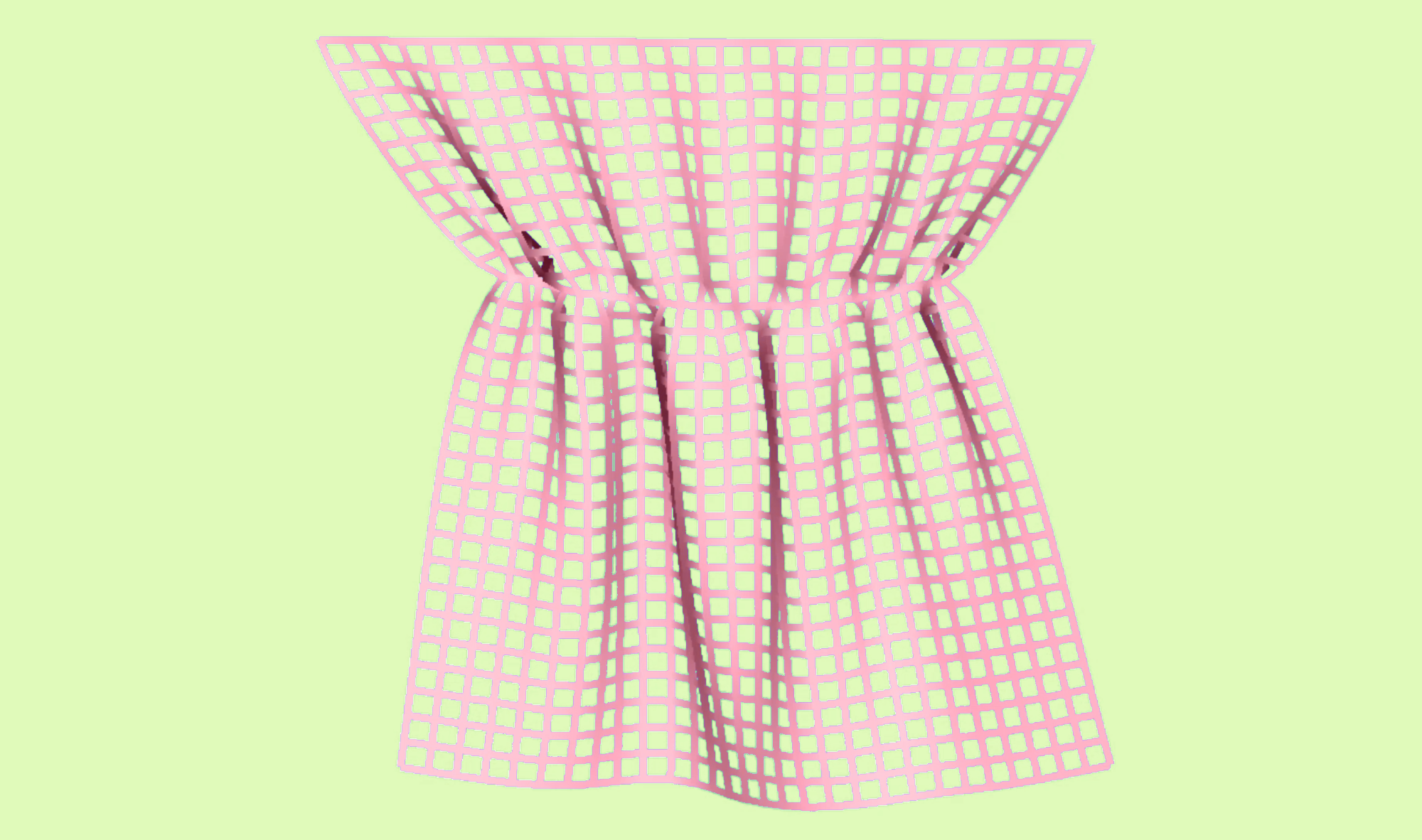
Yarn-Level Cloth Simulation
Source Code↗ Video↗Some of the properties of fabric, especially knit fabric, come from the sliding of
individual yarns. Runs are an obvious example of yarn-level movement in woven fabric:
one yarn gets caught and is forced to slide past the yarns that it is woven through,
deforming the fabric in a characteristic way.
In order to be performant, most
methods for fabric simulation abstract away the yarns. But what if we want to simulate behaviors that emerge from yarn sliding?
My simulator is based on a 2014 paper by Cirio et al. which proposes a method for simulating woven fabric at the yarn level.
Like many cloth simulation methods, this method uses a particle-based discretization of the farbic.
Each yarn crossing is described using a particle with five degrees of freedom. Three degrees of
freedom describe the location of the particle in 3D space and two describe its parametric location
along the two yarns that make up the crossing.
Using a force model, we can then update particle coordinates over time.
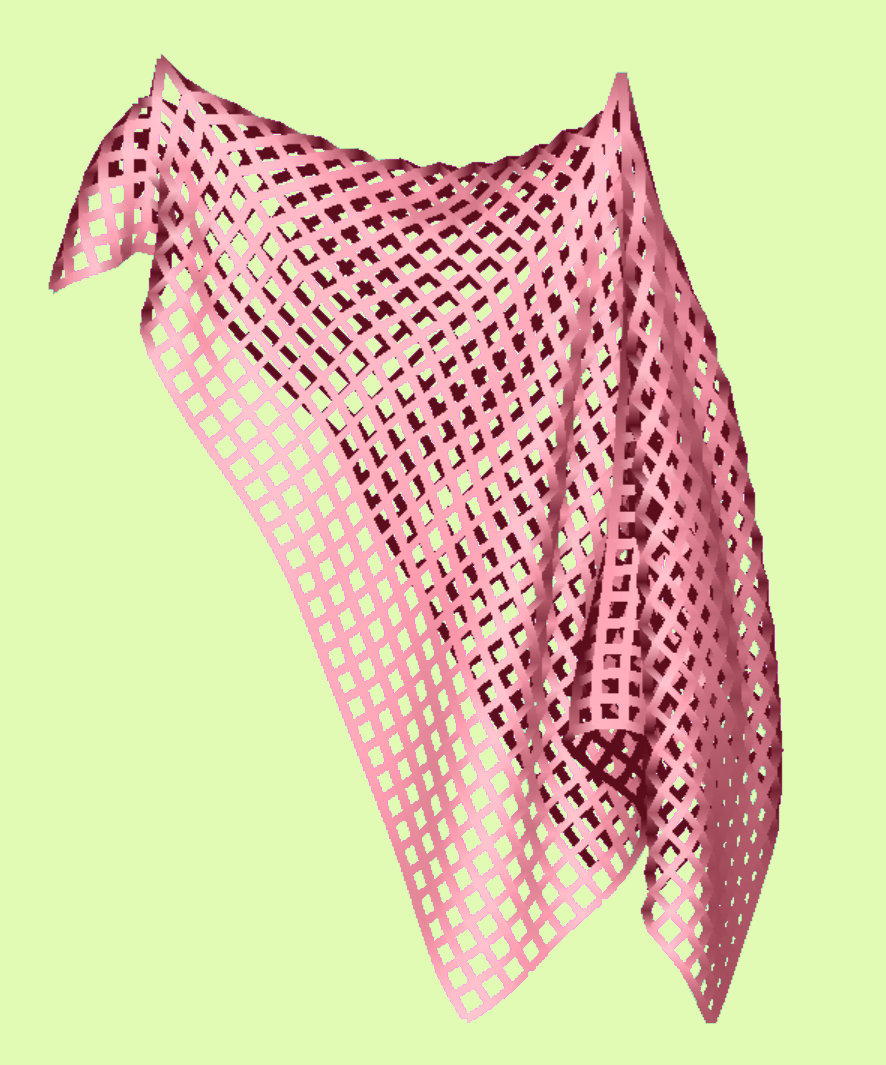
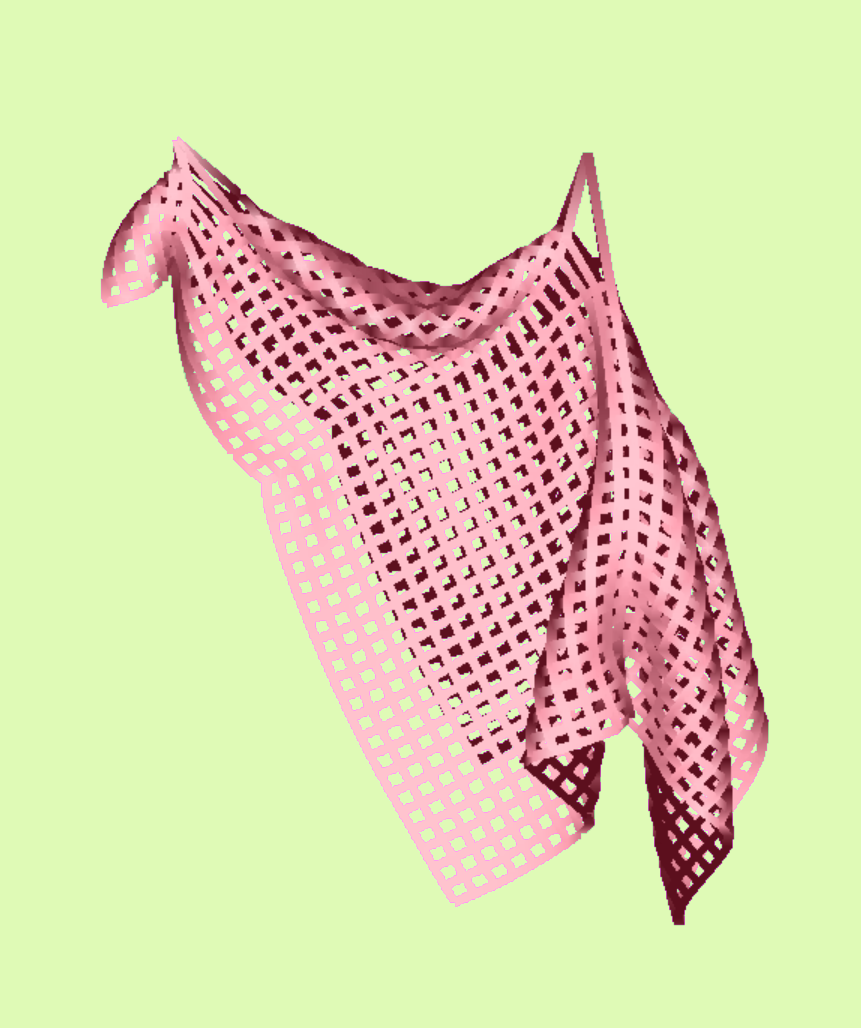
In the pictures below, you can see the resting positions of two sheets of woven farbic. By varying the
friction coefficient, we get different amounts of sliding.
As I mentioned before, runs are a great example of yarn-level movement! To create the picture below, I slowly decreased the length of one yarn.